Wedding Photography: 10 Pro Tips for a Smoother Day and Better Images
Introduction
Wedding photography is one of the most challenging - and rewarding - genres. There are no do-overs, timelines move fast, and the emotional moments don't wait.
A great wedding photographer combines technical skill with people skills, calm time management, and the ability to react instantly when things change.
Here are 10 practical, field-tested tips to help you stay organized, shoot with confidence, and deliver images your couples love.
Quick Take: The best wedding photographers win on prep + communication + redundancy. A clean timeline, a gear backup plan, and calm direction = more real moments and fewer mistakes.
1. Prep Early (It Saves Your Day)
Wedding photography starts long before the wedding.
Before the event, make sure you:
- Review the timeline and key locations (getting ready, ceremony, portraits, reception)
- Ask about lighting and restrictions (flash rules, church/venue rules, etc.)
- Create a "must-have" list for family formals and key moments
Good prep reduces stress and prevents missed shots.
2. Bring Backup Gear - Always
On a wedding day, you don't gamble.
At minimum, bring:
- A second camera body
- Backup lenses
- Extra batteries, chargers, and memory cards
You might never need it... until you do.
3. Know How to Handle Mixed Lighting
Weddings move through very different lighting conditions - window light, harsh midday sun, dim ballrooms, dance floors.
Make sure you can:
- Use natural light for flattering portraits
- Work confidently with flash when needed
- Adjust quickly when conditions aren't ideal
Lighting is often the difference between "fine" and "wow."
4. Shoot More Than Eye Level
Don't live at one angle all day.
Mix it up with:
- High angles (balcony, doorway, step stool)
- Low angles for dramatic moments
- Natural framing (through flowers, arches, guests)
Variety creates storytelling - and makes the gallery feel more cinematic.
5. Chase Real Moments, Not Just Poses
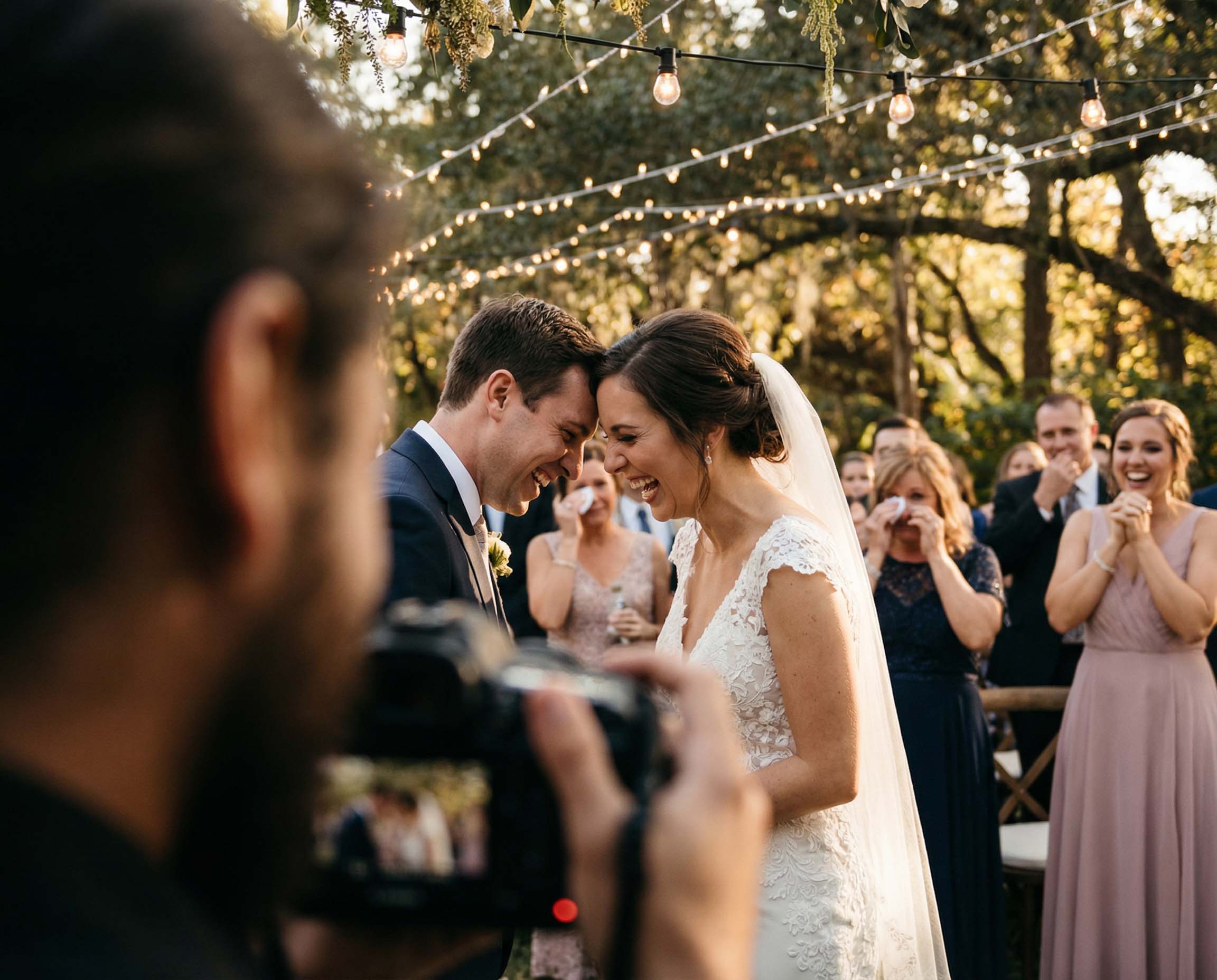
The most powerful images are usually unplanned: a tear, a hug, a burst of laughter.
Stay alert, keep your camera ready, and anticipate reactions - especially during the ceremony, speeches, and first dances.
6. Coordinate With Your Second Shooter
If you have a second shooter (or assistant), clear roles make everything smoother.
Agree in advance on:
- Who covers which parts (details, candids, ceremony angles, cocktail hour)
- How you'll communicate during the day
- What matters most if the timeline runs late
A synced team produces better coverage - and fewer gaps.
7. Keep Communication Calm and Clear
Great photos start with trust. Couples shoot better when they feel safe and relaxed.
Focus on:
- Clear expectations before the wedding
- A calm, confident presence on the day
- Simple direction without over-posing
8. Create a Consistent Editing Style
Your editing is part of your brand.
To keep it professional:
- Stick to a consistent look across the full gallery
- Don't overdo trendy filters
- Make skin tones and color feel natural
A recognizable style helps you stand out and attracts the right couples.
9. Back Up Immediately
After the wedding, don't wait.
As soon as you can:
- Back up all cards
- Store copies in at least two separate places
It's a small habit that prevents a huge nightmare.
10. Keep Improving
Even experienced wedding photographers stay sharp.
Keep leveling up by:
- Practicing in new lighting situations
- Studying photographers you respect
- Reviewing your own weddings to spot what to improve
Wedding Photography Checklist (The Essentials)
- Timeline: getting ready, first look, ceremony, family formals, reception highlights
- Shot priorities: couple portraits + key reactions (parents, bridal party, speeches)
- Gear backup plan: second body, extra cards, extra batteries, duplicate critical lenses
- Lighting plan: ceremony rules, reception flash setup, backup for dark dance floors
- People plan: who rounds up family, who holds the timeline, who signs off on formals
- After the day: immediate backups + clear delivery expectations
FAQ: Wedding Photography
How many hours should a wedding photography package cover?
It depends on the timeline, but the practical question is: do you cover getting ready + ceremony + portraits + main reception moments? Start from the schedule and build coverage around the "must-have" moments.
How do you handle family formals fast?
Use a pre-built list, have one person from each family help round people up, and keep directions simple. Efficiency matters more than perfection here.
What's the biggest mistake newer wedding photographers make?
Under-prepping for mixed lighting and skipping redundancy. A backup body/card/battery is non-negotiable on a no-redo event.
Wrap-Up
Wedding photography is a mix of preparation, calm execution, and awareness of the moments that matter.
With a solid plan, backup gear, strong communication, and consistent delivery, you'll show up more confident - and deliver galleries that speak for themselves.
Ready to run your photography business smarter?
Start a free trial and see how one platform replaces spreadsheets, email threads, texts, and scattered tools.
